Smart Cooler or Full Micro Market? How to Choose
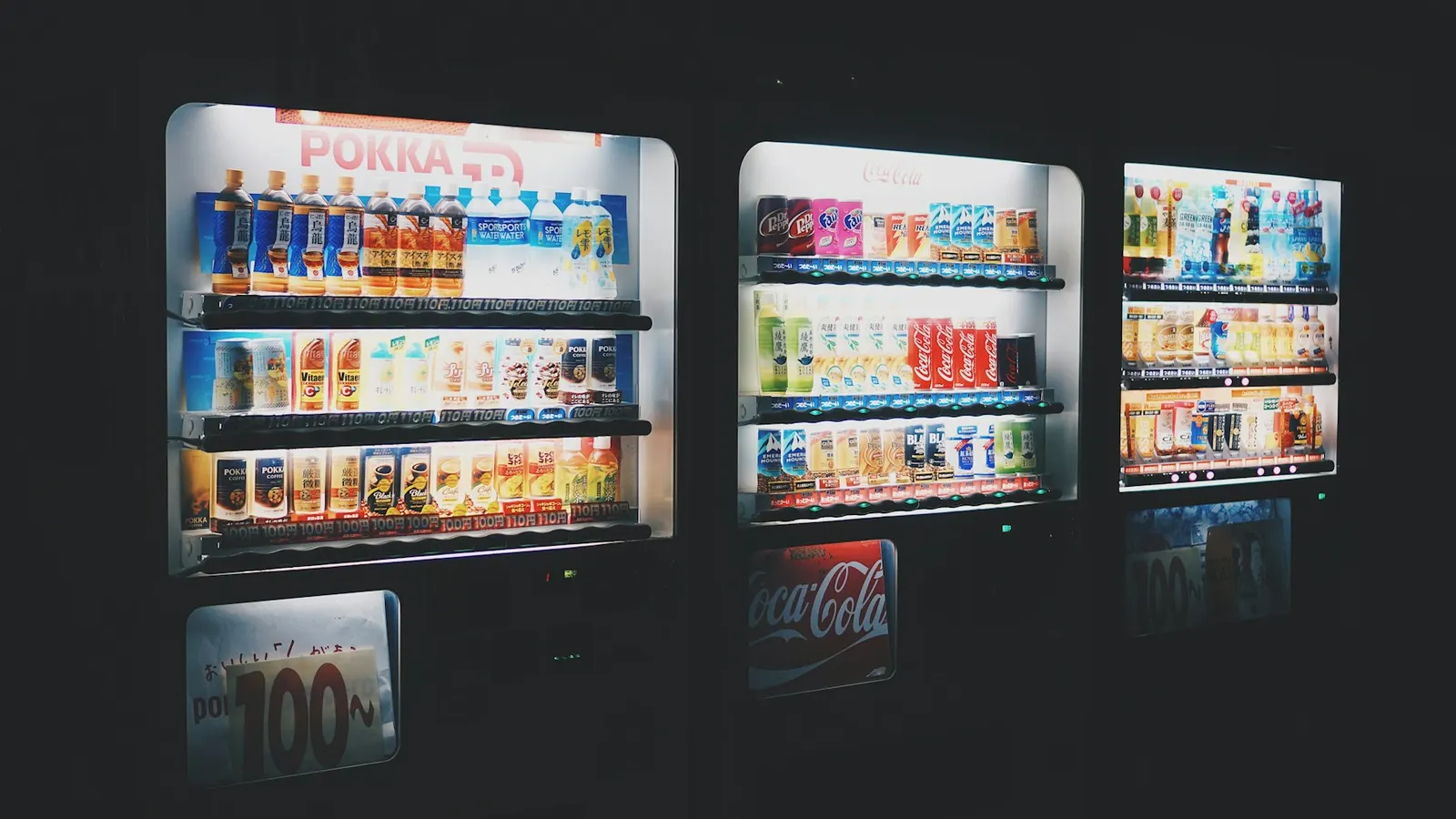
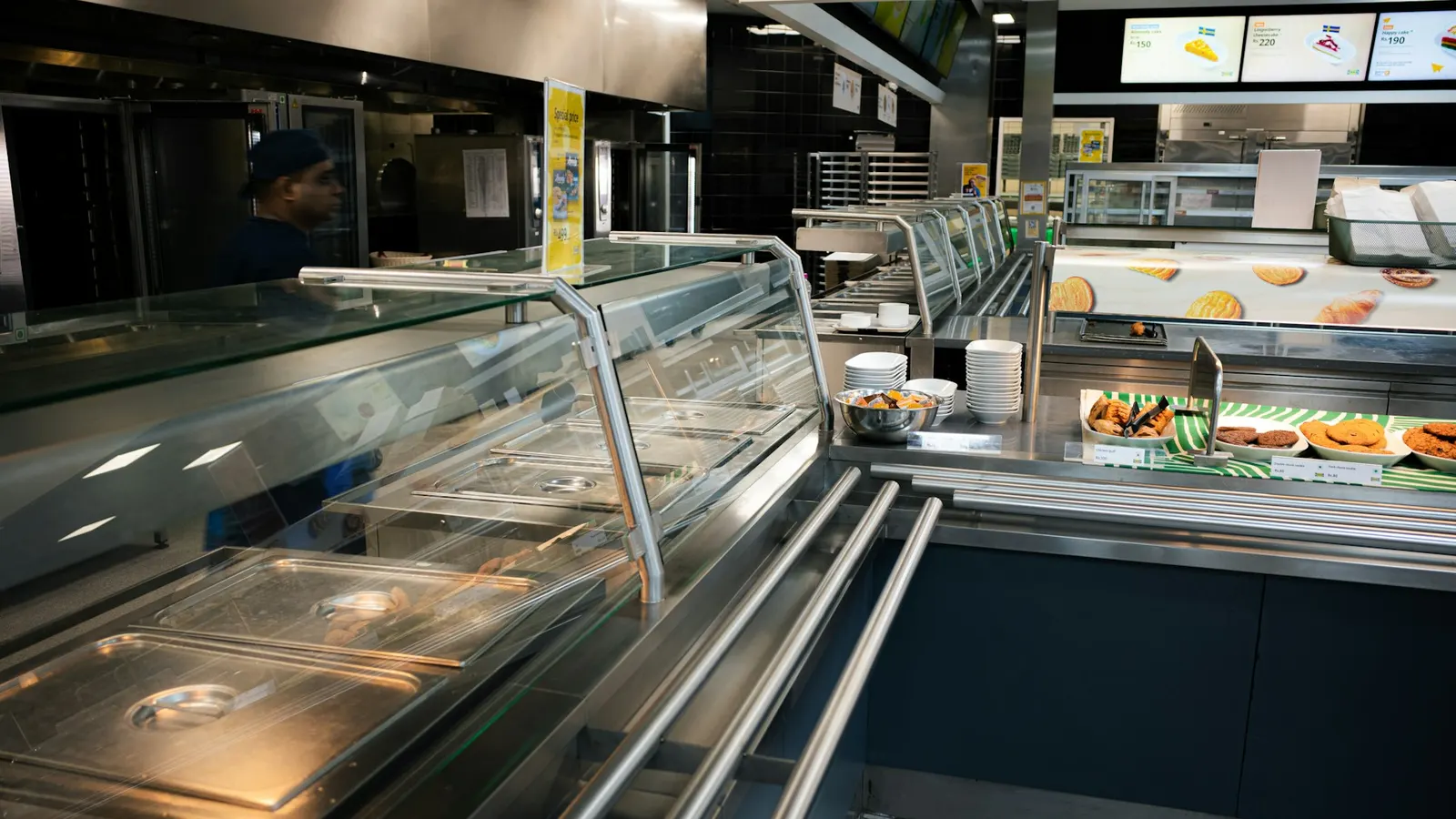
“Micro market” covers a wider range of setups than most people expect. At one end it’s a single smart cooler, about the size of a vending machine. At the other it’s a full open-concept store with shelving, several coolers and a self-checkout kiosk. In between sits the hybrid: a few coolers and a small shelf run with a kiosk.
Choosing between them comes down to four questions: how many people you’re feeding, how much space you have, when people eat, and what they need to eat.
The three setups at a glance
| Smart cooler | Hybrid | Open-concept market | |
|---|---|---|---|
| What it is | One refrigerated cabinet, unlock and take | A few coolers plus shelving and a kiosk | A full breakroom store: shelves, coolers, freezer, kiosk |
| Footprint | Roughly a vending machine | A wall or corner of the breakroom | A dedicated area of the breakroom |
| Menu | Drinks, fresh meals, snacks; limited by one cabinet | Wider: fresh, snacks, some frozen | Widest: fresh, frozen, snacks, drinks, larger portions |
| Best for | Smaller teams, tight spaces, satellite areas | Mid-sized sites, mixed shifts | Larger facilities, multiple shifts, sites far from food |
Each one is covered in detail: smart coolers, hybrid markets and open-concept markets.
1. Headcount
More people means more variety gets bought before it expires, and fresh food only works when it sells through. A larger site can support a full market with real meal variety. A smaller team, or a satellite area of a big facility, may be better served by a smart cooler that carries a focused selection.
Use total daily headcount, not just the biggest shift. A plant with three shifts of 80 is a very different site from an office with 80 people who all leave at 5.
2. Space
Measure the space before you fall in love with a setup. A smart cooler needs about the space a vending machine would, plus a standard outlet. A full open-concept market needs a real area of the breakroom with room to browse, several outlets, and a spot for the kiosk.
If the breakroom is small, that doesn’t rule out a micro market. It just points toward a smart cooler or hybrid. We size the install to the room you actually have.
3. Shifts and hours
Every setup here runs around the clock; nobody has to staff it. That’s the whole point for night shifts. But overnight crews tend to want more filling food, so a site with a big third shift needs more meal-sized items, not just more snacks. That usually tips the decision toward a hybrid or full market.
4. What people need to eat
- Mostly drinks and grab-and-go snacks? A smart cooler handles it.
- Real lunches for people who can’t leave? You want room for fresh meals: sandwiches, salads, wraps, microwave entrées. That means a hybrid or full market.
- A healthcare unit, distribution center or plant with no food nearby? The breakroom may be the only option for a whole shift. Go bigger.
Starting small and growing
You don’t have to get it perfect on day one. Many facilities start with a smart cooler or hybrid, then expand once usage proves out. Our route drivers and warehouse team restock based on how much is actually being used, and the product mix gets tuned to what sells. If the cooler keeps emptying out before the next visit, that’s a clear sign it’s time to go bigger.
What it costs
For most qualifying facilities, there’s no equipment cost and no monthly fee. We supply, install, stock and service the market; employees pay for what they buy. If you want to lower prices for your team, a subsidy lets the company cover part of each purchase. Our FAQ covers the details.
Not sure which fits?
Tell us your headcount, shifts and a rough sense of the space, and we’ll recommend a setup. If you’re in manufacturing, logistics, healthcare or a corporate office, our industry pages show how each setup tends to work in that kind of facility. Get a quote to get started.
Common questions
What is a smart cooler?
A single refrigerated cabinet that works like a tiny self-serve store. Employees unlock it, take what they want, and are charged for what they took. It fits roughly where a vending machine would go.
How much space does a micro market need?
Anywhere from a smart-cooler footprint to a dedicated breakroom store. A small setup is one cooler with a compact checkout; a full open-concept market adds shelving, more coolers and a self-checkout kiosk.
Can we start small and grow?
Yes. Many facilities start with a smart cooler or a hybrid setup and expand once they see how much it's used. We adjust the product mix and restocking as usage grows.